

What Is a Tankless Water Heater?
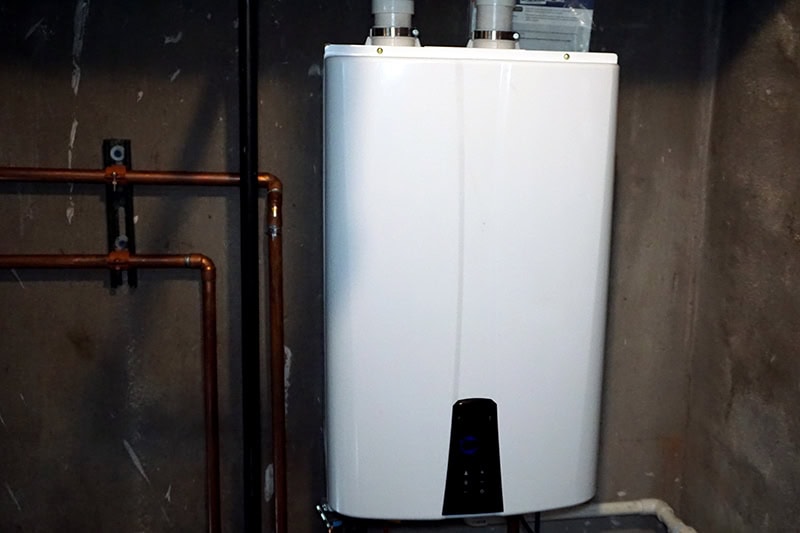
Unlike traditional water heaters that store a large volume of heated water, tankless models heat water on demand. This means you only heat the water you need when you need it.
You don’t store 20 to 80 gallons of hot water in your Virginia home for cooking, drinking, and bathing because it flows directly from the tap.
Tankless units are efficient and convenient and offer more advantages than tank water heaters. They heat water on demand instead of storing it in a tank, so your Augusta County water is always hot when it leaves the faucet.
At Vailes, we install electric and gas water heaters, tank-style and tankless, for our customers in Fishersville, VA, and the surrounding communities. If you are looking for efficiency, reliability, and convenience in a water heater, you won’t go wrong choosing a tankless unit. This blog will help you discover if a tankless water heater is the right choice for your household!
Table of Contents
- Vailes Tankless Installation
- Which Style of Water Heater is Most Popular?
- How Tankless and Tank Heaters Differ
- How Tankless Heaters Work
- Tankless Water Heater Pros and Cons
- Installing a Tankless Water Heater
- Understanding Your Tankless System
- Tankless Water Heater Maintenance
Vailes Tankless Installation
In addition to installing, repairing, and maintaining water heaters, our licensed and certified professionals at Vailes provide a range of residential and commercial services in Augusta County. Our expert crew services and installs drains, sewer lines, pipes, and fixtures and can provide solutions that best suit your needs.
Make Vailes your only choice for water heater replacement. We can help you decide between tank and tankless models, but first, we recommend you learn how these two appliances differ.
Which Style of Water Heater is Most Popular?
The water heater in your home is likely a tank-style model, which is the more common heater, although tankless heaters are gaining ground.
For example, of 123.53 million homes surveyed by the U.S. Energy Information Administration (EIA) for its 2020 Residential Energy Consumption Survey, 8.03 million homes had tankless water heaters, and 115.5 million had tank-style heaters. The number of tankless heaters in homes has increased by 5 million since the EIA collected data for the 2015 survey.
How Tankless and Tank Heaters Differ
Tank water heaters store and continuously heat 20 to 80 gallons of water, depending on the tank size. Cold water flows into the tank to replace the hot water you use.
However, simultaneous activities, such as dishwashing, showering, and washing laundry, can deplete the hot water quickly, making you wait for the tank to refill and heat the added cold water.
Tankless heaters, also called on-demand water heaters, take up less space than traditional water heaters. Sizes vary, ranging from approximately 10 inches tall and 7 inches wide to 30 by 25 inches. They mount on the wall almost anywhere in your home, from the basement to the laundry room to the inside of a closet.
Tankless units heat water as it flows through the heater, making them more energy-efficient than traditional water heaters.
How Tankless Heaters Work
A tankless heater can sense when you turn the faucet handle to hot or start an appliance that uses hot water. Its gas burner or electric element responds by heating the water. When you turn off the tap or the appliance, the water stops flowing, and the heating element or burner in the water heater shuts down.
There is no waiting for the water to heat, and there is no worry about a catastrophic tank failure. Although tankless units can leak, the water damage they cause is less severe than a tank rupture, which can flood the immediate area with 40 to 80 gallons of water, depending on the unit’s size.
Tankless Water Heater Pros and Cons
You can save money on heating bills by switching from a tank heater that heats its contents continuously to an on-demand heater that consumes energy only when you need hot water. The U.S. Department of Energy (DOE) says on-demand water heaters can be 24 to 34 percent more efficient than conventional tank units in households using 41 gallons or less of hot water daily. The percentage range drops to 8 to 14 percent if the home uses 86 gallons of hot water daily. The DOE says installing a small, on-demand water heater at each hot water outlet may improve energy savings even more.
Tankless models are pricier but can last 20 years or more compared to tank water heaters, which typically last 10 to 15 years.
Installing a Tankless Water Heater
When sizing a conventional water heater for your home, we consider how many gallons the tank holds. Tankless units, however, are measured by their flow rates.
When our licensed plumbers size a tankless heater, they consider the number of people in your Fishersville, VA, household, the fixtures and their flow rates, fixtures you might use simultaneously, and the temperature of the cold water supply. We use that information to evaluate your water needs and recommend the best tankless heater for your household.
We also determine the best location for the new water heater and if additional electrical wiring, gas line upgrades, or venting is needed.
Understanding Your Tankless System
There are two main types of tankless water heaters:
- Whole-Home Tankless: These function similarly to traditional heaters but offer superior efficiency. They are ideal for large households with high hot water demand.
- Point-of-Use: These smaller units provide hot water to a single fixture, like a kitchen faucet or showerhead. They are perfect for supplementing a whole-home system or ideal for smaller homes.
Tankless Water Heater Maintenance
On-demand water heaters generally require less maintenance than tank water heaters. Descaling the unit every year will remove mineral buildup and improve performance. Cleaning or replacing filters will help maintain efficient water flow, and dusting the unit will keep it free of dirt and other debris.
At Vailes, we can inspect your on-demand water heater annually, clean and descale it, and ensure components function correctly. An annual tune-up can reveal and address minor issues before they become full-blown problems.
Go Tankless Today With Vailes!
Let us at Vailes help you determine if a tankless water heater is the best choice for your Fishersville, VA. Call us at 540-942-0198 or request service online.